

Curing time is important because freshly placed concrete needs adequate time to develop strength and durability before a new pool deck is subjected to normal use. Concrete continues to gain strength after it hardens, with 28 days commonly used as the standard age for specifying compressive strength, although the appropriate timing for specific activities depends on the concrete mixture, weather, project requirements, and contractor guidance.
What Does Concrete Curing Actually Mean?
Concrete curing is the process of maintaining suitable moisture and temperature conditions to allow cement hydration to continue after placement.
Curing is different from simply allowing concrete to dry.
Concrete gains strength through chemical reactions involving cement and water. If moisture is lost too quickly or curing conditions are inadequate, the concrete may not develop its intended properties as effectively.
Key Terms
Setting: The stage when fresh concrete transitions from a workable material toward a hardened state.
Curing: Maintaining conditions that support continued hydration and development of concrete properties.
Specified Strength: The strength value used in a concrete specification, commonly referenced at 28 days unless another testing age is specified.
Hydration: The chemical reaction between cement and water that contributes to concrete hardening and strength development.
Why Should You Wait Before Using A New Pool Deck?
A new pool deck may appear hard relatively quickly, but appearance does not mean the concrete has reached its intended strength.
Allowing sufficient curing time helps the concrete develop its required properties before it experiences:
- Foot traffic
- Furniture
- Poolside equipment
- Repeated wetting
- Cleaning activity
- Outdoor temperature changes
- Regular recreational use
The appropriate waiting period should be determined by the contractor based on the specific concrete mixture and installation conditions, rather than relying on a generic assumption.
For homeowners researching pool deck contractors in Murfreesboro, asking about the curing plan is just as important as discussing the design and finish.
How Long Does A New Concrete Pool Deck Need To Cure?
There is no single number that applies to every project.
Concrete specifications commonly use 28 days as the reference age for compressive strength, but that does not mean every activity must be prohibited for exactly 28 days. The appropriate return-to-use schedule depends on factors such as concrete mixture, temperature, moisture conditions, finishing, and the intended load or activity.
A contractor should provide specific instructions for:
- When limited foot traffic is permitted
- When furniture can be placed
- When the pool area can be used normally
- When cleaning is appropriate
- When sealers or other treatments can be applied
Do not substitute a generic internet timeline for project-specific instructions.
What Can Happen If You Use The Pool Deck Too Soon?
Premature use can expose the concrete to stresses before it has developed sufficient strength.
Potential problems can include:
- Surface damage
- Scuffing or abrasion
- Premature wear
- Damage to decorative finishes
- Problems caused by moving heavy furniture
- Increased risk of surface defects
The severity depends on how early the deck is used and on the type of activity.
Walking across a surface is very different from dragging heavy furniture across it or subjecting it to repeated high-impact activity.
Does Weather Affect Concrete Curing?
Yes. Temperature and moisture conditions can influence curing and strength development.
Hot, dry, or windy conditions can increase moisture loss from fresh concrete. Cold conditions can also affect hydration and strength development.
Research summarized by the National Ready Mixed Concrete Association shows that nonstandard initial curing conditions can reduce later-age strength, underscoring the importance of temperature and moisture control during early concrete development.
This makes project-specific curing practices especially important for outdoor concrete.
Why Is Proper Moisture Important During Curing?
Concrete needs water for cement hydration.
If the surface loses moisture too quickly, the hydration process can be affected. Rapid moisture loss can also contribute to unwanted surface behavior, particularly when combined with unfavorable environmental conditions.
Proper curing methods vary according to the project and concrete system. The contractor should select an appropriate curing approach based on the mix, weather, placement, and specifications.
The National Ready Mixed Concrete Association identifies curing as an important technical consideration in concrete construction and provides dedicated guidance on curing in-place concrete.
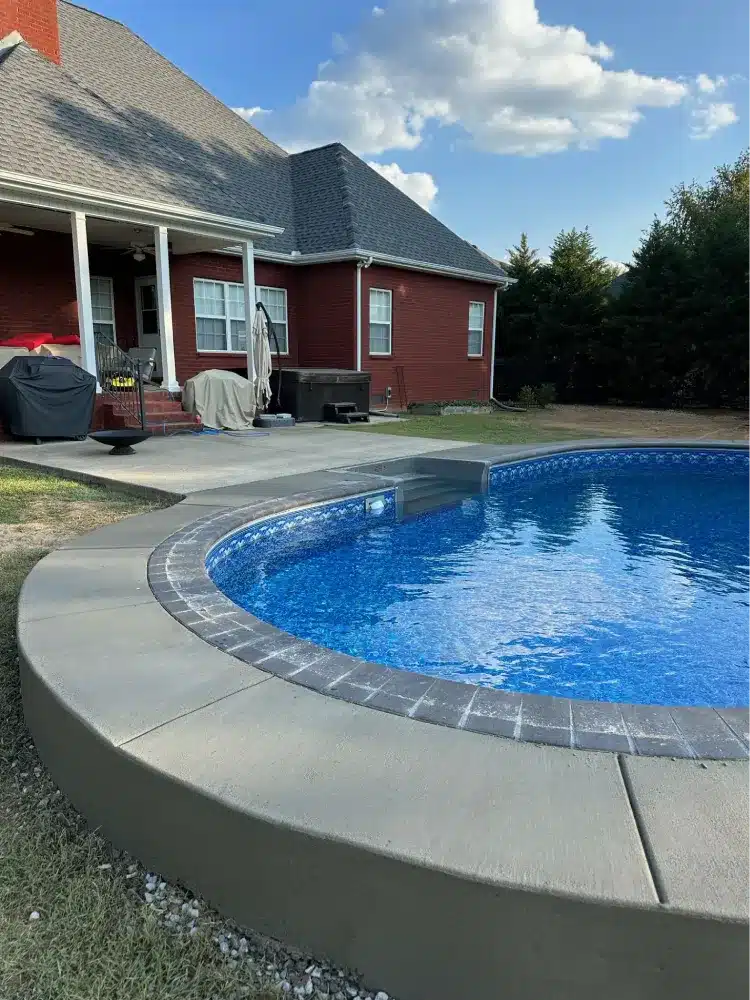
Does Decorative Concrete Need The Same Curing Time?
Decorative finishes do not eliminate the need for proper curing.
Stamped concrete, textured finishes, and other decorative pool deck treatments still depend on the underlying concrete developing appropriate properties.
Elite Concrete offers stamped concrete for pool decks in Murfreesboro, combining decorative options with durability and slip resistance.
The decorative finish may affect maintenance and appearance, but it does not change the fundamental need for appropriate curing.
Curing Time Vs. Drying Time: What Is The Difference?
| Factor | Drying | Curing |
| Main concept | Loss of moisture | Conditions supporting hydration |
| Purpose | Surface becomes less wet | Concrete develops properties |
| Appearance | Can look hard or dry | Strength continues developing |
| Importance | Visual condition | Long-term performance |
| Timing | Can happen relatively quickly | Continues over an extended period |
This distinction is important because homeowners may assume that concrete is ready for use once it no longer looks wet.
A surface can appear finished while the concrete continues to develop internal strength.
What Should You Avoid During The Curing Period?
Follow the contractor’s specific instructions, but avoid unnecessary stress on a newly installed deck.
Common precautions include:
- Do not place heavy furniture prematurely.
- Avoid dragging objects across the surface.
- Keep unauthorized vehicles away.
- Avoid aggressive cleaning.
- Do not apply unapproved chemicals.
- Follow instructions regarding pool water and surrounding use.
- Keep pets and children away when instructed.
These precautions help protect the surface as the concrete continues to develop.
Common Myth: Concrete Is Fully Cured When It Looks Dry
This is a common misconception.
Concrete does not become fully developed simply because its surface looks dry and hard. Curing and strength development continue beyond the point when the concrete appears finished.
The 28-day age is commonly used for specified compressive strength, but actual project requirements can differ.
The safest approach is to follow the contractor’s written guidance for the specific installation.
How Do Professional Contractors Manage Pool Deck Curing?
Professional installation should account for curing during project planning rather than treating it as an afterthought.
Elite Concrete describes its process for pool decks in Murfreesboro, TN, as involving consultation, design, construction, and a final walkthrough. The company also emphasizes proper drainage, surface characteristics, durable materials, and construction techniques designed for long-term outdoor use.
A professional should also communicate what the homeowner can and cannot do after installation.
For example, a homeowner in Blackman may be eager to furnish a newly completed pool area, but moving patio furniture onto the deck should wait until the contractor confirms that the surface is ready.
What Should You Ask Your Concrete Contractor About Curing?
Before the project begins, ask:
- What curing method will be used?
- How will weather conditions affect the curing process?
- When can people safely walk on the deck?
- When can furniture be placed?
- When can the pool area be used normally?
- When can the deck be cleaned or sealed?
- What conditions would require additional curing time?
Clear answers help set realistic expectations and reduce the possibility of accidental damage.
For homeowners in Siegel, this conversation can be especially useful when coordinating landscaping, outdoor furniture delivery, pool work, and other projects around a new deck.
How Does Curing Affect Long-Term Pool Deck Performance?
Proper curing is one component of producing durable concrete.
The finished performance of a pool deck also depends on factors such as:
- Concrete mixture
- Site preparation
- Base conditions
- Reinforcement
- Placement
- Finishing
- Jointing
- Drainage
- Weather exposure
- Maintenance
Curing should therefore be viewed as one part of a larger installation system.
Elite Concrete states that its pool deck services emphasize durability, drainage, slip-resistant surfaces, and construction techniques intended to withstand weather and frequent use.
Give Your New Pool Deck Time To Cure
Curing time matters because concrete needs appropriate moisture and temperature conditions to continue developing strength after placement. A new pool deck may look finished before it has reached the properties required for normal use.
The correct waiting period depends on the concrete mixture, environmental conditions, project specifications, and intended use. Elite Concrete can provide project-specific guidance for foot traffic, furniture, cleaning, sealing, and pool-area use rather than relying on a universal timeline.
If you’re planning a new pool deck, contact us to discuss your project and learn how the installation and curing process will be managed from the initial design through completion.
People Also Ask
How Long Should You Wait Before Walking On A New Concrete Pool Deck?
The contractor should provide the appropriate timeline based on the specific concrete mixture and conditions. Light foot traffic and full use may have different requirements.
Is Concrete Fully Cured After 28 Days?
Twenty-eight days is commonly used as the reference age for specified compressive strength, but concrete can continue developing strength beyond that point.
Can You Put Patio Furniture On New Concrete?
Wait until the contractor confirms that the concrete has developed sufficient strength for the intended load. Avoid dragging furniture across a newly installed surface.
Does Hot Weather Affect Concrete Curing?
Yes. High temperatures, wind, and low humidity can increase moisture loss and affect early curing conditions. Proper curing practices help manage these risks.