

Well-built stamped concrete can handle winter weather without trouble. The surface itself rarely fails in cold temperatures. Problems typically occur when water penetrates the slab, the sealer wears down, or the wrong de-icing products are used. With a sound base, proper sealing, and routine care during freezing conditions, a stamped patio or walkway can maintain its color and pattern for years.
We pour stamped concrete for driveways, patios, sidewalks, porches, and pool decks. The following are some of the most common questions homeowners ask about protecting and maintaining during winter.
Why Winter Is Hard on Any Concrete Surface
Concrete is strong, but it is also porous. It holds small amounts of water in tiny pores and hairline gaps. When temperatures drop below freezing, that water expands as it turns to ice. When it thaws, the water moves again. Middle Tennessee often swings above and below freezing many times in a single winter instead of staying frozen for weeks. Each swing is called a freeze-thaw cycle. One cycle does no visible harm. Dozens of cycles, year after year, can open small cracks, loosen the top layer, and cause flaking known as scaling. Our clay-heavy soil adds a second stress. Clay swells when wet and shrinks when dry, so the ground under a slab moves with the seasons. Stamped concrete in Murfreesboro, TN faces the same forces as a plain slab. The difference is that damage shows up more on a decorative surface, because color and texture are the whole point.
What Protects Stamped Concrete in Cold Weather
Three things determine how well a stamped surface holds up through winter.
1. The base and the pour
A slab is only as good as what sits under it. Proper grading, a compacted base, correct thickness, and control joints in the right places give the concrete room to move without random cracking. We plan these details before anything gets poured, because no sealer or coating can fix a weak base later.
2. A healthy sealer
Sealer is the main shield for stamped concrete in Murfreesboro. It slows water from soaking into the surface, guards the color from sun and stains, and helps the pattern keep its depth. Sealer wears down over time, faster in spots with heavy foot traffic, full sun, or standing water. Many sealer makers recommend recoating every two to three years. The real schedule depends on the product and how the surface is used.
3. Good drainage
Water that pools on a slab, or runs under its edge, is the start of most winter damage. Patios and walkways should slope away from the house. Downspouts should empty away from the concrete, not onto it.
How to Tell If Sealer Needs Attention Before a Freeze
A quick late-fall check shows whether a stamped surface is ready for winter.
- The water test. Sprinkle a little water on the surface. If it beads up, the sealer is still working. If it darkens the concrete and soaks in, the sealer is worn in that spot.
- Faded or chalky color. A dull or powdery color often means the sealer has broken down and the surface is exposed.
- Uneven sheen. Glossy areas next to flat areas show where traffic has worn the sealer away.
- White haze. A cloudy or milky look can mean moisture is trapped under the sealer. This needs a closer look before any new coat goes on.
Sealer goes on best in dry weather above the temperature the manufacturer lists, often around 50 degrees. In Middle Tennessee, that usually means fall is the last good window before spring.
De-Icers: What to Use and What to Avoid
Ice on a stamped surface is a real safety concern, since a smooth, sealed finish can get slick. The goal is traction without chemical damage.
| Option | Effect on stamped concrete |
|---|---|
| Sand or fine grit | Adds traction with no chemical effect. Sweep it off after the thaw so it does not grind into the sealer. |
| Calcium chloride (used sparingly) | Works at low temperatures. Use the smallest amount that does the job and rinse it off after the thaw. |
| Rock salt (sodium chloride) | Can speed up surface scaling, especially on newer concrete. Best avoided on decorative surfaces. |
| Ammonium nitrate or ammonium sulfate products | Known to attack concrete chemically. Avoid them. |
| Magnesium chloride | Gentler on skin and plants, but heavy repeat use has been linked to concrete damage. Use with care. |
Newly poured concrete is the most sensitive. Many concrete guides advise against applying chemical de-icers during the first winter after installing Murfreesboro stamped concrete. Sand is the safer choice for protecting new work.
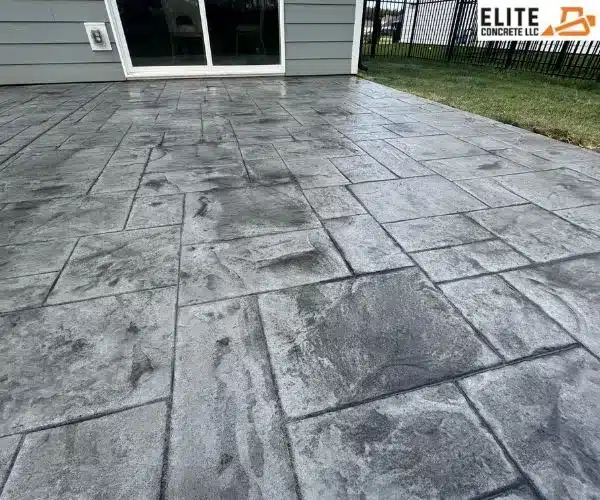
Shoveling and Snow Removal
Snow is not common every winter here, but it happens. A few habits protect the surface:
- Use a plastic shovel or a shovel with a rubber edge. Metal blades can scratch sealer and chip the raised edges of the pattern.
- Do not chip at ice with a metal tool. Let sand provide grip and let the sun do the rest.
- Keep snow piles off the slab where you can. Melting piles feed water into the same spot through every freeze-thaw cycle.
Common Winter Problems on Stamped Concrete
Scaling and flaking
Scaling is when thin pieces of the top layer flake off. It is mostly a surface problem caused by water and freezing, often made worse by salt. Small areas can sometimes be cleaned and resealed. Wide scaling usually means the surface needs a more involved repair.
Hairline cracks
Fine cracks are common in any concrete and are not always a sign of failure. The question is whether they stay the same or keep growing. A crack that widens from one season to the next, or comes with one side sitting higher than the other, points to movement in the base.
Color loss
Fading usually comes from worn sealer and sun exposure, not from cold alone. Cleaning and resealing can bring back much of the original look.
Spalling
Spalling is deeper than scaling. Larger chunks break loose, sometimes exposing the stone in the mix. This is a sign of water problems or a weak surface layer and needs a professional look.
Can Stamped Concrete Be Repaired?
Yes, in many cases. Stamped concrete repair depends on the type and size of the damage.
- Cleaning and resealing handles fading, light wear, and many small surface issues.
- Crack repair can address cracks that are stable. Matching color and texture on a decorative surface takes care, so a repaired crack may still be visible up close.
- Section replacement makes sense when one area has heaved, sunk, or broken up while the rest of the slab is sound.
- Full replacement is the answer when the base has failed across the slab.
Matching an existing pattern and color is part craft and part testing. Any contractor should explain what a repair or replacement section will look like before work starts, so the result matches what the homeowner expects.
A Simple Winter Checklist
- Do the water test in October or early November.
- Reseal if the water soaks in, while the weather is still dry and mild.
- Check that downspouts drain away from the concrete.
- Stock sand for icy mornings instead of rock salt.
- Use a plastic shovel.
- Walk the surface in early spring and note any new cracks or flaking.
Frequently Asked Questions
Does stamped concrete crack more than regular concrete?
No. Stamped concrete is regular concrete with a pattern and color added. It cracks for the same reasons any slab does, mainly base movement and water. Good base preparation and control joints matter more than the finish.
Can I use salt on my stamped patio?
Rock salt is best avoided on stamped concrete, especially in the first year after a pour. Sand gives traction without chemical damage. If a de-icer is needed, use a small amount of calcium chloride and rinse it off after the thaw.
How often should stamped concrete be resealed?
Many sealer makers suggest every two to three years. Surfaces with heavy traffic, full sun, or pool water exposure may need it sooner. The water test shows when a surface is due.
Can stamped concrete be poured in winter?
Concrete can be poured in cold weather with the right planning, but decorative work is more sensitive to temperature. We look at the forecast and the project before scheduling a stamped pour in winter.
Will a repaired area match the rest of my stamped concrete?
A close match is often possible, but an exact match is not guaranteed on older, weathered surfaces. Clear expectations before work starts help avoid surprises.
Protect Your Stamped Concrete With Professional Care
Keep your stamped concrete looking its best through every season with proper installation, maintenance, and timely repairs. Whether you’re planning a new patio, driveway, sidewalk, or pool deck, Elite Concrete can help you choose a decorative concrete solution that fits your property and needs.
Contact us today to discuss your project, explore your design options, and get a free estimate. Let us help you create a durable, attractive concrete surface you can enjoy for years to come.