You can add color or patterns to stamped concrete without extra cost. By using the right techniques and timing, you can achieve a professional-looking finish. The key is understanding how color and texture work together and when to apply them during the process. With some planning, homeowners can create attractive, polished surfaces without paying for premium upgrades.
Stamped concrete can transform ordinary driveways, patios, and walkways into decorative features. Many people assume that colored or patterned concrete always comes with a high price tag, but this is not necessarily true. Using simple techniques and standard materials, you can achieve a stunning finish at a reasonable cost.
Methods to Add Color Without Extra Cost
Adding color to stamped concrete can be accomplished through a few different techniques. Each method has unique benefits, and selecting the right one depends on the desired effect, budget, and project type.
Integral Color vs. Surface Color
Integral color is mixed directly into the concrete before pouring. This method ensures consistent color throughout the slab and is less prone to fading or peeling. It works well for large projects because the color becomes a permanent part of the concrete. Since it is added at the batching stage, it doesn’t significantly increase costs compared with standard concrete.
Surface-applied color, such as concrete stains or dyes, is added after the concrete has partially or fully cured. Surface color provides flexibility because it can be layered, washed, or combined with different shades to achieve subtle or dramatic effects. It also highlights textures created during the stamping process.
| Method | Cost Impact | Longevity | Ease of Application | Flexibility in Design |
| Integral Color | Low | High | Moderate | Limited |
| Surface Color | Low | Medium | Easy | High |
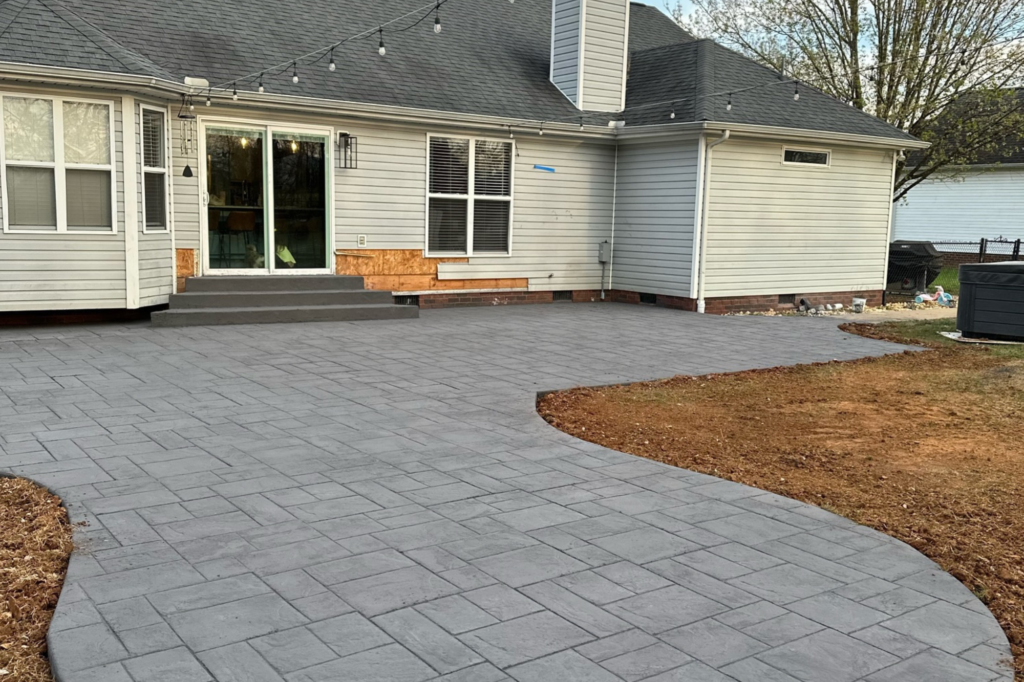
For example, a homeowner in Murfreesboro, TN, recently applied a surface stain to a newly stamped concrete patio. The result was a vibrant, professional-looking finish that cost only slightly more than plain concrete. This example shows that careful planning and proper timing of applications can eliminate the need for costly premium materials.
Using Stencils and Basic Tools
Patterns and textures can be added to stamped concrete without the need for expensive custom molds. Reusable stamping mats, rollers, or even DIY stencils made from cardboard or plywood can create a variety of effects. Simple patterns, like geometric shapes, brick impressions, or random stone textures, can be achieved with these low-cost tools.
One advantage of using stencils is the flexibility to create borders, highlights, or accents. By combining stencils with surface-applied color, homeowners can add depth and visual interest to a space without paying for specialized molds or tools.
Natural Pigments and Dyes
Powdered pigments, such as iron oxides, can be mixed directly into concrete or diluted for surface application. These pigments provide long-lasting color while highlighting the natural texture of the stamped surface. Applying pigments during the curing stage ensures even color distribution and prevents patchiness.
For homeowners considering stamped concrete in Murfreesboro, TN, natural pigments offer a cost-effective way to enhance both aesthetics and durability. When applied correctly, these pigments can mimic the look of more expensive decorative concrete treatments.
Methods to Add Patterns Without Paying Extra
Adding patterns to stamped concrete is more about timing and technique than purchasing premium tools. With careful planning, even simple, inexpensive tools can produce stunning results.
Timing the Stamping
Stamped concrete must be imprinted while the surface is still in the plastic phase, meaning it is soft enough to take the texture but firm enough to hold the shape. Stamping too early or too late can result in incomplete patterns or cracking. Standard stamping mats or reusable molds are sufficient if applied at the right moment.
Correct timing also ensures that patterns appear crisp and consistent across the entire surface. Many budget-conscious projects achieve professional results simply by prioritizing proper stamping timing over purchasing custom molds.
Simple Pattern Techniques
There are several straightforward ways to add patterns without extra cost:
- Randomized Stamping: Creates a natural stone or slate appearance.
- Borders and Accents: Use painter’s tape or simple stencils to create decorative edges.
- Repeating Geometric Shapes: Low-cost molds or DIY templates can be reused to maintain consistency.
During a recent patio project, a homeowner achieved a highly detailed patterned surface using only standard stamping mats and creative placement. This example demonstrates that stamped concrete in Murfreesboro can be visually impressive without premium materials or labor.
Layering Techniques
Layering techniques involve applying multiple color washes or textures to a stamped surface. For instance, a light diluted stain can accentuate raised areas, creating depth and contrast. Brushes or sponges can also be used to enhance specific sections, such as borders or corners.
This method works well for driveways, patios, and walkways. For Murfreesboro, TN stamped concrete, layering is an effective way to mimic premium finishes, highlighting patterns while maintaining cost efficiency.
Applying This to Solve the Problem
Here’s a practical step-by-step workflow for adding color and patterns without increasing costs:
- Decide on the desired effect: Determine whether the project needs color, patterns, or both.
- Choose a cost-effective method: Integral color, surface stains, or natural pigments for color; stencils and stamping mats for patterns.
- Prepare the concrete properly: Timing is crucial. Ensure the surface is clean and at the right consistency for stamping or color application.
- Apply color and pattern strategically: If using surface stains, apply them before sealing; stamp patterns while the concrete is still soft.
- Seal the concrete: A basic clear sealer enhances color and protects the surface.
Following these steps ensures a professional-looking result while minimizing additional costs. Many homeowners have successfully applied this workflow for patios, driveways, and walkways. Using stamped concrete in this way allows them to enjoy decorative finishes without premium charges.
Debunking a Common Industry Myth
A common myth in the concrete industry is that colored or patterned stamped concrete always requires a premium. Many homeowners assume that professional finishes need custom molds, rare pigments, or specialized labor.
In reality, much of the cost of premium stamped concrete comes from custom molds or high-end pigments, not from the fundamental techniques themselves. By using standard stamping mats, integral or surface colors, and careful timing, homeowners can achieve high-quality results. Budget-friendly approaches have repeatedly demonstrated that well-planned projects can match the look of more expensive alternatives.
Cost Comparison Summary
The following table compares budget-friendly options versus premium approaches:
| Feature | Budget-Friendly Option | Premium Option | Cost Difference |
| Color | Integral or surface stain | Custom color blends | Low vs high |
| Patterns | DIY stamps, stencils | Custom molds | Moderate vs high |
| Sealing/Finishing | Basic clear sealer | High-end sealers | Low vs high |
This table emphasizes that most decorative stamped concrete effects can be achieved without paying for premium molds or pigments.
In Summary
Adding color or patterns to stamped concrete doesn’t have to cost extra. With methods like integral or surface-applied color, simple stamping mats, stencils, or layering, Elite Concrete can help create a polished, long-lasting finish. Homeowners in Murfreesboro, TN, can enjoy attractive patios, walkways, and driveways without paying more.
By following proper planning and application techniques, even standard materials can produce results that rival high-end stamped concrete designs. Contact us today to transform your patios, walkways, or driveways with professional, affordable finishes.
People Also Ask
Q: Can I change the color of existing stamped concrete?
A: Yes, surface-applied stains or dyes can be used on existing stamped concrete if the surface is clean and prepared.
Q: Do DIY stamps look professional?
A: Yes, reusable mats or homemade stencils can achieve professional-looking patterns when applied consistently.
Q: How long does stamped concrete last with surface color?
A: Surface-applied color lasts many years when sealed properly, though periodic maintenance may be required.
Q: Is stamping concrete without molds possible?
A: Yes, simple textures and patterns can be achieved using stencils, rollers, or homemade templates.