

Stamped concrete offers homeowners attractive patterns, customizable colors, and a durable surface that can resemble natural stone, brick, or slate at a potentially lower installation cost. Its main disadvantages include cracking, periodic resealing, slippery finishes when wet, and difficult repairs. The right choice depends on your budget, outdoor space, and maintenance expectations.
What Is Stamped Concrete and How Does It Work
Stamped concrete is a decorative paving technique that creates textured patterns in freshly placed cement-based material before it fully hardens.
Contractors use specialized stamping mats to reproduce the look of brick, flagstone, slate, and other building materials. Coloring treatments can enhance the finished design.
Homeowners researching stamped concrete in Murfreesboro, TN often consider this option when they want an attractive outdoor surface without installing individual paving stones.
The process involves several important components:
- Subgrade: The soil beneath the installation that must provide adequate support.
- Subbase: A prepared layer of material that helps establish a stable foundation when required.
- Integral color: Pigment mixed throughout the material before placement.
- Color hardener: A surface-applied product that adds color and improves abrasion resistance.
- Stamping mats: Tools used to imprint decorative patterns.
- Control joints: Planned grooves or cuts that encourage shrinkage cracks to form in designated locations.
- Sealer: A protective treatment that helps resist stains, moisture, and surface wear.
Installation quality significantly affects appearance and long-term performance.
What Are the Main Pros and Cons of Stamped Concrete
Before selecting a decorative finish, consider how its benefits compare with its limitations.
| Advantages | Disadvantages |
| Resembles natural stone or brick | Can develop cracks |
| Offers numerous colors and patterns | Requires periodic resealing |
| Creates a continuous decorative surface | Repairs may be visually noticeable |
| Can cost less than premium natural stone | Some sealed finishes become slippery |
| Suitable for several residential applications | Installation requires skilled timing |
| Supports customized outdoor designs | Color may change with weathering |
Neither column automatically outweighs the other.
For many homeowners, visual appeal and design flexibility are major advantages. Others prioritize easier repairs or lower maintenance requirements.
5 Advantages of Stamped Concrete for Residential Properties
1. Attractive Designs Without Individual Stone Installation
Stamped concrete can replicate the appearance of slate, flagstone, brick, cobblestone, and wood planks without installing individual pieces. Homeowners can choose patterns and colors that complement their property’s exterior. The final appearance depends on design selection and workmanship.
2. Durability With Proper Installation
Properly installed stamped concrete can provide years of residential use. Its longevity depends on site preparation, drainage, curing, and maintenance. Driveways must also be designed to handle expected vehicle loads. Quality installation is essential for dependable performance.
3. Flexible Designs for Outdoor Spaces
Stamped concrete suits traditional, contemporary, and rustic properties. Decorative borders, contrasting colors, and different patterns can customize patios, walkways, and driveways while complementing existing landscaping and architecture.
4. Fewer Individual Joints Than Pavers
Stamped concrete creates a more continuous surface than individual pavers, reducing spaces where weeds can grow. However, properly placed control and expansion joints remain important for accommodating movement and managing cracking.
5. Potentially Lower Cost Than Natural Stone
Stamped concrete may cost less than premium natural stone, depending on site preparation, design complexity, materials, and labor. Simpler patterns generally require less detailed finishing. Homeowners should also consider long-term maintenance when comparing installation costs.
5 Disadvantages Homeowners Should Understand
1. Cracking Can Occur Over Time
Concrete can crack due to shrinkage, temperature changes, soil movement, or heavy loads. Control joints help manage cracking but cannot eliminate it. Proper site preparation and drainage are essential.
2. Repairs Can Be Difficult to Match
Matching the original color, texture, and pattern can be challenging when repairing stamped concrete. Unlike individual pavers, damaged sections may require more extensive restoration.
3. Periodic Resealing Is Necessary
Sealants help preserve color and resist stains but gradually wear down. Resealing depends on the product, traffic, and exposure. Follow manufacturer recommendations to avoid unnecessary buildup.
4. Some Finishes Become Slippery When Wet
Glossy sealers can reduce traction, especially around pools, steps, and entrances. Homeowners should discuss textured finishes and slip-resistant additives to improve safety.
5. Installation Requires Experienced Professionals
Stamping requires precise timing, suitable weather conditions, and coordinated workmanship. Poor execution can produce inconsistent patterns and textures. When comparing Murfreesboro, TN stamped concrete services, evaluate contractors based on their experience and installation quality.
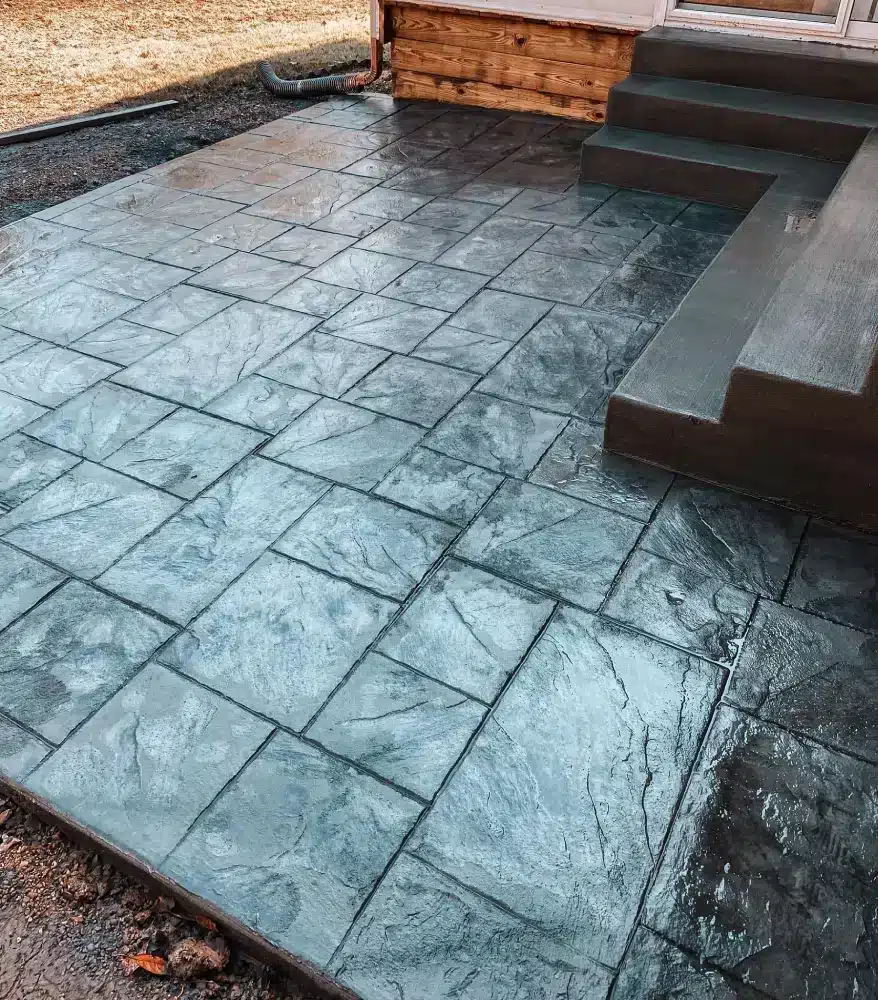
Common Myth: Stamped Concrete Is Maintenance-Free
A common misconception is that stamped concrete never needs maintenance once installed.
In reality, decorative surfaces require cleaning, periodic inspection, and proper sealing to maintain their appearance.
Sealers can deteriorate through sunlight, weather, and traffic.
Dirt and organic material may also accumulate within textured patterns.
Another misconception is that decorative stamping prevents cracking.
Patterning changes the surface appearance, but it does not eliminate normal shrinkage or ground movement.
Proper preparation and maintenance remain essential.
How Do You Maintain Stamped Concrete
Routine care does not need to be complicated, but consistency matters.
Recommended Maintenance Checklist
- Remove debris regularly. Sweep away leaves, dirt, and abrasive particles.
- Clean with suitable products. Use mild cleaners compatible with the installed sealer.
- Address spills promptly. Remove oil, grease, and staining materials before they are exposed for long periods.
- Inspect control joints. Look for deterioration or movement that may require evaluation.
- Monitor surface traction. Check frequently wet areas for slippery conditions.
- Evaluate sealer condition. Follow the manufacturer’s guidance before scheduling resealing.
Avoid using aggressive cleaning chemicals or unnecessarily powerful pressure-washing techniques.
Excessive abrasion can damage decorative finishes.
Why Consider Elite Concrete for Your Residential Project
Elite Concrete is a family-owned contractor serving Murfreesboro and surrounding Middle Tennessee communities.
The company offers stamped concrete installation, driveways, patios, pool decks, and other residential construction services.
Its published process includes four stages:
- Consultation: Reviewing the site, project requirements, and estimate.
- Design: Discussing materials, patterns, and construction details.
- Build: Completing the installation while communicating project progress.
- Walkthrough: Reviewing the finished work with the property owner.
Elite Concrete’s decorative services include stone-inspired designs, customizable colors, and applications for patios and driveways.
Homeowners interested in stamped concrete in Murfreesboro can discuss their property’s layout, intended use, and preferred appearance before requesting an estimate.
Make the Right Choice for Your Outdoor Space
Stamped concrete offers customizable designs, durability, and practical functionality for outdoor spaces. Before choosing a finish, consider potential cracking, maintenance, repair difficulty, and traction.
Elite Concrete can help you explore options for your driveway, patio, or outdoor living area.
Contact us to discuss your project, explore decorative options, and request a free quote for professional installation.
People Also Ask
Is Stamped Concrete Worth It for a Residential Patio?
Yes, it can be worthwhile for homeowners seeking a decorative, durable patio with customizable patterns. Proper installation and maintenance are important for long-term performance.
Does Stamped Concrete Crack Easily?
It can crack due to shrinkage, temperature changes, soil movement, or loading. Appropriate preparation and control joints help manage cracking but cannot eliminate every risk.
Is Stamped Concrete Slippery When It Rains?
Some finishes can become slippery when wet, particularly when glossy sealers are applied. Texturing and compatible traction additives can improve slip resistance.
How Often Does Stamped Concrete Need Resealing?
Many surfaces are resealed every two to three years. The right interval depends on product specifications, traffic, weather exposure, and the sealer’s condition.
Is Stamped Concrete Better Than Pavers?
Neither option is universally better. Stamped surfaces provide continuous decorative designs, while individual pavers may offer easier localized replacement and greater flexibility.