

Before building a concrete patio, you should expect a structured approval process that includes permits, zoning review, and inspections. These requirements ensure your project meets safety codes, drainage standards, and property boundary rules. Approval is less about the construction itself and more about how the structure impacts land use and water flow.
Understanding these steps early prevents delays and redesigns, especially when planning a residential outdoor project where local enforcement can be strict and highly detail-oriented.
Core Approval Requirements You Will Encounter
Local authorities evaluate every patio project using a standardized checklist that focuses on land-use compliance and environmental impact.
One of the most common starting points is a concrete patio in Murfreesboro, TN, application review, which typically triggers a zoning and drainage assessment before construction can even begin.
Approval generally depends on six core elements: permit submission, site plan accuracy, zoning clearance, drainage evaluation, setback verification, and final inspection readiness. Missing any one of these often results in automatic revision requests.
Each submission must demonstrate that the proposed structure will not interfere with easements, stormwater systems, or neighboring property boundaries. This is especially important in suburban developments where lot density is higher, and runoff control is closely monitored.
Permit Workflow and Administrative Review Stages
The permitting process follows a predictable sequence designed to reduce compliance risk before construction begins.
A typical concrete patio in Murfreesboro submission begins with a pre-application review, where officials assess whether the project is viable under current zoning rules. This step often prevents wasted effort on incomplete designs.
Next comes the formal submission, in which engineered drawings and site plans are reviewed for accuracy. The review phase can include multiple departments such as zoning, engineering, and stormwater management. Once approved, a permit is issued allowing construction to begin under specific conditions.
Inspections usually occur during and after construction. These ensure the work matches the approved plans and that no unauthorized modifications were made during the build.
Zoning Compliance and Property Restrictions
Zoning regulations define what can be built and where it can be placed. Setback requirements are especially important because they establish minimum distances from property lines, easements, and existing structures.
A Murfreesboro concrete patio proposal must clearly show compliance with lot coverage limits and impervious surface restrictions. These rules exist to prevent flooding, drainage overload, and overcrowding of residential parcels.
Zoning violations are one of the leading causes of permit rejection. Even minor encroachments into setback zones can require full redesigns rather than simple corrections.
Drainage and Stormwater Considerations
Drainage compliance is one of the most heavily scrutinized parts of the approval process. Authorities evaluate whether runoff will remain on the property or adversely affect surrounding areas.
A Murfreesboro, TN, concrete patio design must demonstrate proper slope direction and runoff dispersion. Improper grading can lead to erosion, foundation damage, or municipal drainage overload, all of which can halt approval.
Engineers often require calculations or grading plans to confirm that water flow will not exceed allowable thresholds. This is especially important in areas with clay-heavy soil, which naturally restricts absorption and increases surface runoff.
Engineering Requirements and Structural Triggers
Not all patio projects require engineering approval, but certain conditions automatically trigger it. These include steep slopes, load-bearing additions, or unstable soil conditions.
In Indian Hills, for example, older parcel layouts and uneven grading often require structural reinforcement analysis before permits are approved. These evaluations determine slab thickness, reinforcement spacing, and subgrade preparation methods.
A properly engineered system ensures long-term durability and prevents settling or cracking caused by shifting soil conditions or improper load distribution.
Misconceptions About Permit Requirements
Myth: Small patios don’t require approval
This is one of the most common misunderstandings in residential construction. Permit requirements are not based solely on size but on impact.
Even a small patio may require full approval if it alters drainage, increases impervious surface area, or crosses setback boundaries. Authorities evaluate environmental and structural impact rather than square footage alone.
A concrete patio installation in Murfreesboro, TN, can still trigger a full review regardless of scale if it affects stormwater flow or utility easements.
Applying our Permit Clarity Protocol (PCP) to solve this
The Permit Clarity Protocol (PCP) is a structured planning method that eliminates approval delays before submission. It aligns design, engineering, and regulatory requirements into a single pre-filing workflow.
The system works by validating zoning constraints, mapping setbacks, and identifying drainage risks before drawings are finalized. This reduces revision cycles and prevents rejections caused by incomplete documentation.
A concrete patio project benefits significantly from this approach because most delays occur during the initial review phase rather than during construction.
In Barfield, early drainage modeling under this framework prevented a redesign by correcting runoff direction before permit submission, saving both time and material costs.
Local Conditions That Influence Approval Speed
Approval timelines vary based on neighborhood layout, soil conditions, and infrastructure age. These variables often matter more than the design itself.
In Blackman, HOA regulations frequently add additional layers of approval beyond municipal requirements, particularly for visible backyard structures.
A concrete patio project in such areas may require design modifications to meet aesthetic or material guidelines imposed by neighborhood associations.
These localized rules can significantly extend approval timelines if not addressed early in the planning phase.
Structural Planning and Soil Behavior
Soil composition plays a critical role in determining whether additional reinforcement is needed. Clay-heavy soils expand and contract with changes in moisture, increasing the risk of cracking.
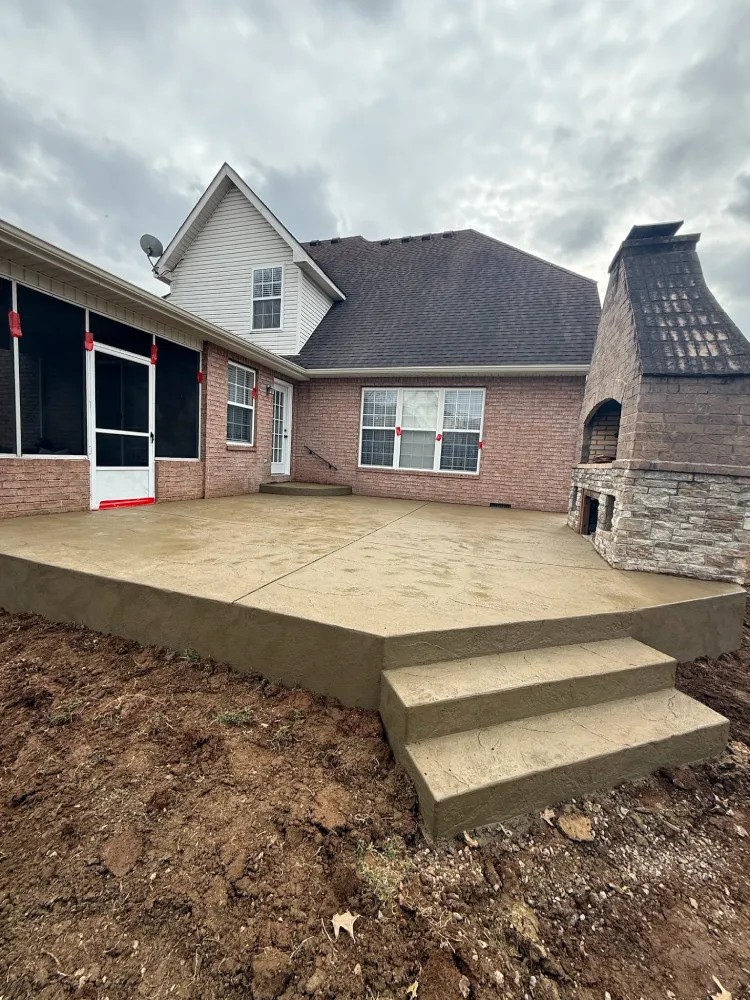
A concrete patio design must account for compaction levels, base material selection, and reinforcement spacing to ensure long-term stability. Without proper preparation, even compliant designs may fail structural expectations during inspection.
Engineering reviews often focus heavily on subgrade preparation because it directly affects slab performance over time.
Drainage Infrastructure and Environmental Impact
Stormwater management is one of the most important factors in residential construction approvals. Improper runoff control can affect neighboring properties and municipal systems.
A concrete patio must demonstrate controlled drainage paths to prevent water from pooling or overflowing into adjacent lots. This often requires grading plans or adjustments to surface slope.
In many cases, inspectors will require proof that runoff is directed toward approved drainage channels rather than natural low points that could cause erosion or flooding.
Definition List: Key Approval Specifications
Building Permit
Official authorization issued by local authorities allowing construction under approved conditions.
Setback Requirement
Minimum distance a structure must maintain from property lines, easements, or other structures.
Impervious Surface Ratio
The percentage of land that prevents water absorption, influencing drainage compliance limits.
Site Plan
Scaled drawing showing property boundaries, proposed construction, and existing structures.
Drainage Compliance
Verification that stormwater flow will not negatively impact surrounding properties or infrastructure.
Inspection Sign-Off
Final approval confirming that construction matches approved plans and regulations.
In Summary
Local approval requirements are designed to ensure safety, drainage control, and proper land use, not to unnecessarily delay construction. When documentation is accurate and zoning constraints are addressed early, the approval process becomes predictable and efficient. Working with Elite Concrete can help streamline this process by ensuring plans are properly prepared and aligned with local requirements from the start.
If you want a compliant, efficient build process without delays or redesign cycles, it’s important to work with professionals who can help with permits, planning, and construction. A structured approach ensures projects move from concept to completion with minimal setbacks and proper regulatory compliance. Contact us today to get expert support and move your project forward with confidence.
Frequently Asked Questions
What approvals are required before building a patio?
Most projects require a building permit, zoning clearance, and at least one inspection during or after construction.
How long does the approval process take?
Timelines vary from a few days to several weeks, depending on complexity and local workload.
Can construction begin before approval?
No. Starting without approval can result in fines, stop-work orders, or forced removal.
Do contractors handle permitting?
Some contractors manage permits, but legal responsibility typically remains with the property owner.