

Concrete can develop uneven surfaces after installation because of improper grading, inconsistent finishing, poor soil compaction, uneven settling, or changes during curing. Some imperfections appear immediately, while others develop as the ground beneath the concrete shifts. Identifying the cause helps determine whether the surface needs minor correction or more extensive repair.
What Causes Concrete Surfaces to Become Uneven?
Uneven concrete can result from poor ground preparation, finishing errors, excess water, drainage problems, or soil movement.
1. Improper Ground Preparation
Poorly compacted soil or aggregate can settle over time, causing concrete slabs to sink, tilt, or become uneven.
2. Inconsistent Concrete Finishing
Uneven leveling, improper timing, or inconsistent finishing can leave ridges and depressions on the hardened surface.
3. Excessive Water in the Concrete Mix
Too much water can increase shrinkage, reduce strength, and weaken the surface, especially if finishing begins before bleed water evaporates.
4. Poor Drainage Around the Slab
Standing water can soften or erode supporting soil, creating voids beneath concrete and causing uneven settlement.
5. Soil Movement and Weather Changes
Soil can expand, contract, or settle as moisture levels change. Temperature fluctuations also cause concrete to expand and contract, making proper joint placement important.
What Types of Uneven Concrete Surfaces Can Develop
Not every uneven surface indicates the same problem.
Understanding the visible signs can help identify which conditions deserve professional attention.
| Surface condition | Possible cause | What it may indicate |
| Small ridges or bumps | Inconsistent finishing | Surface-level imperfection |
| Shallow depressions | Uneven placement or finishing | Potential drainage issue |
| Sunken concrete section | Soil settlement or erosion | Possible loss of support |
| Raised slab edge | Soil movement or slab displacement | Trip hazard |
| Uneven joints | Differential settlement | Movement between sections |
| Rough, flaking surface | Finishing or durability problems | Surface deterioration |
| Cracks with height differences | Movement or inadequate support | Potential structural concern |
Some conditions are primarily cosmetic, while others may affect safety or long-term performance.
A concrete contractor in La Vergne, TN, can determine whether the issue involves surface finishing, underlying soil, or concrete movement.
How Can You Tell if Uneven Concrete Is a Serious Problem
Minor variations in surface texture are not necessarily signs of defective installation.
However, noticeable changes in elevation or drainage deserve closer attention.
Follow these five steps to evaluate the condition.
- Look across the surface from a low angle. This can reveal depressions, ridges, and elevation differences that may not be obvious from above.
- Check for standing water. After rainfall, observe whether water collects in unexpected areas.
- Inspect joints and slab edges. Look for sections that have shifted vertically or separated.
- Monitor changes over time. Photograph affected areas to determine whether the unevenness is increasing.
- Request a professional evaluation. Significant settlement, growing cracks, or trip hazards should be assessed by a qualified concrete contractor.
Don’t assume every low spot requires a full replacement.
The appropriate correction depends on the cause, slab condition, and severity of the unevenness.
What Concrete Installation Terms Should Homeowners Understand
Several technical terms help explain how concrete develops an even, durable surface.
Subgrade: The prepared soil beneath a concrete slab that provides foundational support.
Compaction: Compressing soil or aggregate to improve stability and reduce future settlement.
Screeding: Leveling freshly placed concrete to the intended elevation using a straightedge or specialized equipment.
Finishing: Creating the desired concrete surface texture and appearance.
Curing: Maintaining appropriate moisture and temperature conditions so concrete can gain strength through cement hydration.
Bleeding: The upward movement of water within freshly placed concrete.
Control joint: A planned groove or cut that encourages shrinkage cracks to occur in predetermined locations.
Differential settlement: Uneven movement of the soil or supporting material beneath a structure.
A La Vergne, TN concrete contractor can help homeowners understand these terms and make informed decisions about installations or repairs.
Myth: Uneven Concrete Always Means the Contractor Did a Poor Job
A common misconception is that every uneven concrete surface results from poor workmanship.
Uneven concrete can develop from installation-related problems, environmental conditions, or movement in the supporting soil.
Improper grading and finishing can create defects during installation.
However, soil erosion, changing moisture conditions, and ground settlement may cause a previously level surface to shift later.
Another misconception is that all concrete surfaces should be completely flat.
Exterior concrete often requires an intentional slope to direct rainwater away from buildings and prevent standing water.
A properly sloped patio or driveway may appear slightly inclined while functioning exactly as designed.
The important distinction is between intentional grading and unintended surface irregularities.
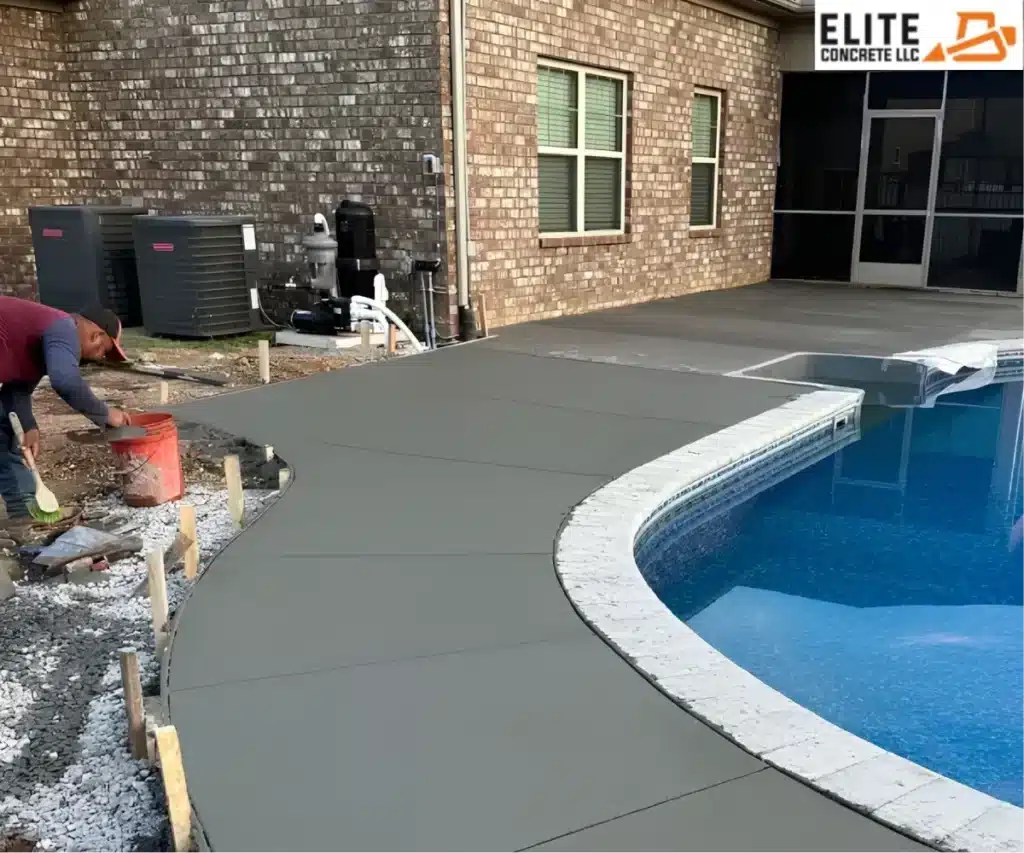
How Does Proper Grading Help Prevent Uneven Concrete
Grading establishes the elevation and slope of the area before concrete placement.
It is essential for both surface alignment and drainage.
Contractors evaluate the intended use of the concrete, nearby structures, existing ground conditions, and where rainwater should flow.
For example, a driveway needs appropriate drainage without creating uncomfortable transitions to the garage or street.
A patio should direct water away from the home while remaining comfortable for outdoor use.
Compare Proper and Improper Grading
| Installation factor | Proper approach | Potential problem |
| Ground preparation | Stable, compacted support | Uneven settlement |
| Surface elevation | Consistent planned levels | Unintended dips or ridges |
| Drainage slope | Directs runoff appropriately | Standing water |
| Base material | Suitable material and preparation | Voids or shifting |
| Concrete placement | Controlled distribution | Inconsistent slab thickness |
| Finishing | Correct tools and timing | Surface irregularities |
Homeowners in Heritage Valley planning a new patio or driveway should discuss drainage and ground preparation with their contractor before installation begins.
These early decisions influence how the finished surface performs over time.
Can Improper Curing Cause Uneven Concrete
Improper curing can contribute to surface deterioration, cracking, and durability problems.
However, it is important to distinguish curing-related defects from unevenness caused by settlement.
Curing allows cement hydration to continue under suitable moisture and temperature conditions.
If newly placed concrete loses moisture too quickly, it may develop plastic shrinkage cracks or a weakened surface.
Extreme temperature conditions may also interfere with proper strength development.
Common Curing-Related Problems
- Plastic shrinkage cracking: Cracks caused by rapid moisture loss before the concrete fully hardens.
- Surface dusting: A weak surface that produces fine powder during wear.
- Scaling: Flaking or peeling of the hardened surface.
- Crazing: A network of fine surface cracks.
- Uneven appearance: Variations in finish or color that may become visible as the concrete cures and dries.
Not all these conditions create significant changes in elevation.
For example, surface discoloration is different from a slab that has physically settled.
A concrete contractor in La Vergne can diagnose the issue and recommend the appropriate repair method.
What Are the Best Solutions for Uneven Concrete
The right solution depends on the extent of the damage and the slab’s condition.
Compare Common Concrete Repair Options
| Solution | Most appropriate for | Important consideration |
| Surface grinding | Minor raised areas | Must preserve adequate slab thickness |
| Concrete resurfacing | Certain superficial imperfections | Requires a sound, stable substrate |
| Slab leveling | Some settled concrete sections | Underlying causes must be addressed |
| Drainage improvements | Water-related settlement or erosion | May require changes around the slab |
| Joint repair | Damaged or deteriorating joints | Does not correct major movement |
| Concrete replacement | Severely damaged or unstable slabs | Requires proper base preparation |
Surface grinding may improve small raised areas, but it will not correct significant voids beneath the slab.
Resurfacing can improve the appearance of certain sound surfaces, but it should not be used to conceal ongoing settlement.
Where the concrete has severe cracking, inadequate support, or extensive deterioration, replacement may be more appropriate.
A professional can determine which approach addresses the actual cause rather than temporarily hiding the symptoms.
When Should Uneven Concrete Be Repaired or Replaced
Evaluate uneven concrete when it affects drainage, creates a trip hazard, or shows signs of continued movement.
Small cosmetic imperfections may not require extensive repairs.
However, more serious conditions include:
- Concrete sections that continue sinking
- Cracks accompanied by vertical displacement
- Water repeatedly collecting near the foundation
- Loose or unstable slab sections
- Significant deterioration across the surface
- Uneven transitions that create safety concerns
A professional inspection can help determine whether the concrete remains structurally sound.
Addressing underlying drainage or soil issues is especially important before repairing the visible surface.
Otherwise, the same problem may return.
People Also Ask
Why Is My Newly Installed Concrete Uneven?
Uneven concrete may result from poor placement, finishing errors, or an unstable base. Significant elevation differences may require professional inspection.
Can Uneven Concrete Be Fixed Without Replacing It?
Sometimes. Grinding can correct minor high spots, while professional leveling may fix settled slabs, depending on their condition.
Is It Normal for Concrete to Have Small Bumps After Installation?
Minor texture variations can be normal, but large ridges, depressions, or uneven transitions may indicate defects.
Does Rain Cause Concrete to Become Uneven?
Rain can erode supporting soil or damage concrete during early placement and finishing if the surface is not protected.
How Can I Prevent My New Concrete Driveway From Becoming Uneven?
Ensure proper site preparation, base compaction, drainage, concrete placement, and curing to reduce the risk of unevenness.
Build a Strong Foundation for Your Next Concrete Project
Concrete surfaces can become uneven because of soil movement, inadequate preparation, improper finishing, drainage problems, or curing-related defects.
Although some imperfections are cosmetic, others may indicate conditions that affect long-term durability and safety.
Understanding the cause is the first step toward choosing an appropriate solution.
Professional installation creates a durable, attractive concrete surface.
Elite Concrete provides residential concrete driveway, patio, and decorative concrete services designed to improve outdoor spaces.
Whether you are planning a new installation or concerned about an uneven existing surface, professional guidance can help you evaluate the next step.
Contact us today to discuss your concrete project and request a free quote.